Digest #9 - Activity Is Not Progress
How reclaiming one-pointed focus helps us pursue what truly matters.

The Culture of Busyness
Overwhelm has become a persistent experience for many of us, with life often feeling like a race against time.
We constantly try to fit the maximum number of tasks into the limited hours that we have, yet it rarely feels like enough.
In this environment, productivity has become synonymous with busyness.
Each day becomes a race to answer messages and tick items off our to-do lists. The days move quickly, and by the end of the week it feels like we’ve accomplished a lot.
But after living like this for some time, unsettling questions can arise:
In doing all of these things, did anything actually move forward? Did I grow in the way I hoped to?
Activity vs Progress
Modern work environments reward responsiveness. An effective person is often considered someone who is quick to reply, available across multiple platforms, and constantly active.
However, there is a difference between activity and progress.
In fact, constant activity can quietly prevent meaningful progress.
When attention is repeatedly interrupted, the mind cannot reach the depth of focus required for serious thinking. Yet it is this depth of thinking that is necessary for pursuing the things that matter most to us.
The Trap of Scattered Attention
Many of us have aspirations we care about deeply - changing careers, building a family, moving somewhere new, or developing new skills. Yet these ambitions are often postponed or ignored as smaller tasks consume our attention.
The result is a subtle trap: we stay busy enough to feel productive, but not focused enough to pursue our deepest calling.
Over time, this can lead to regret.
One-Pointed Intelligence
In her book The Top Five Regrets of the Dying, Bronnie Ware writes that the most common regret people express is: “I wish I had lived a life true to myself.”
In the Bhagavad-gita (2.41), Krishna offers guidance on how to avoid this regret by speaking about one-pointed intelligence.
He explains that those who are resolute in purpose possess one-pointed intelligence, while the intelligence of those who are irresolute becomes many-branched.
In other words, when our attention is scattered, the effort we invest in what we pursue becomes diluted.
From this perspective, we can conclude that productivity is not simply about doing more.
Rather, productivity is the ability to recognise which efforts truly deserve our attention, and to arrange our lives in a way that allows us to pursue them.
One Minute Practice: Identifying Priorities
Write down:
• 3 things that matter this week
• 3 things that matter today
• 3 things that don’t deserve your attention today
This simple exercise forces prioritisation and elimination, bringing us closer to the one-pointed focus that Krishna describes in the Bhagavad-gita.
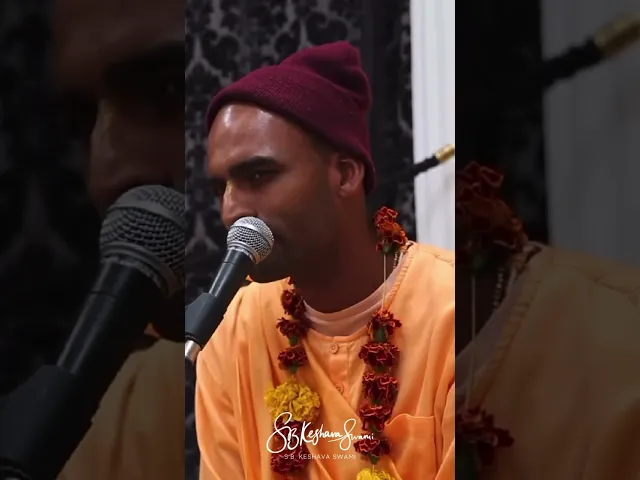
Listen to this short message from S.B. Keshava Swami on the topic of time and prioritisation: