Digest #10 - When Was the Last Time You Were Fully Present?
An ancient practice for the restless modern mind

In a recent study observing smartphone usage, researchers found that almost 100% of participants used their phones in the presence of their partner over an eight-day period. The results strongly suggested that this habit had a significant negative impact on people’s mood, wellbeing, relationship quality, and even the quality of their parenting.
Although technology has undoubtedly brought many benefits to our lives, spiritual teachers often describe smartphones as “weapons of mass distraction,” warning that one of the greatest dangers of the digital age is the death of our presence.
For so many of us, there is a relentless urge to fill every moment of silence. We struggle to spend time alone. Our attention is bombarded with notifications. We are constantly revisiting the past or planning for the future.
This has made our minds restless by habit, fuelling great anxiety. Perhaps it is unsurprising, then, that studies suggest our mood and relationships suffer when we live this way.
What’s worse is that this state has become so normal we rarely question it, and therefore fail to notice the cost of living without presence.
When we do eventually reflect, the evidence is clear: conversations lose their depth and relationships become shallow. Experiences seem to pass in an instant because we’re always thinking about the next thing. Even work loses its meaning, leading to the kind of regret discussed in Digest #9.
In the Bhagavad-gita (6.26), Krishna addresses the restless nature of the mind and advises that whenever the mind wanders, one must bring it back.
This, of course, is easier said than done in the moment.
That is why ancient wisdom points to a morning meditation practice as the medicine for a restless mind.
As S.B. Keshava Swami mentioned in the video shared in the previous digest, we make time for what we consider important. Meditation is one such investment - it enables us to retrain the mind.
In a world filled with “weapons of mass distraction,” being present is imperative for protecting the depth of our relationships, the meaning of our work, and the quality of our life itself.
One-Minute Practice
Tomorrow morning, before checking your phone or starting your day, take one minute to sit quietly.
Close your eyes and bring your attention to your breath.
Notice how quickly the mind begins to wander: to things to do, memories, or worries.
When it does, gently bring it back.
This simple act of returning the mind is the beginning of meditation.
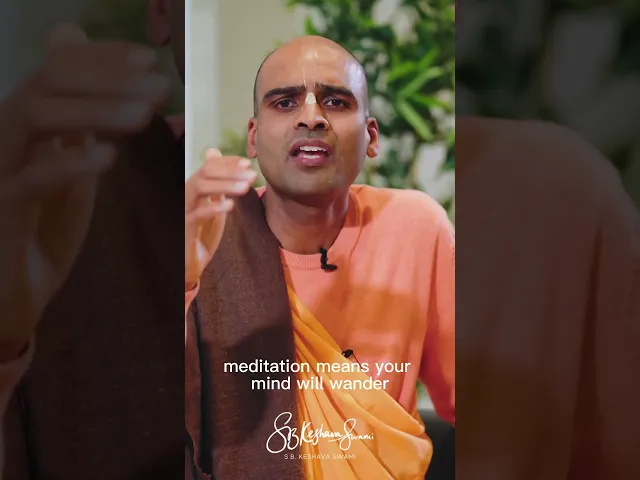
Listen to this message below by S.B. Keshava Swami grounding us in the reality of meditation: