Digest #14 - The Words You Can’t Take Back
The hidden chain reaction behind the moments we regret most
The heat of the moment is a strange place.
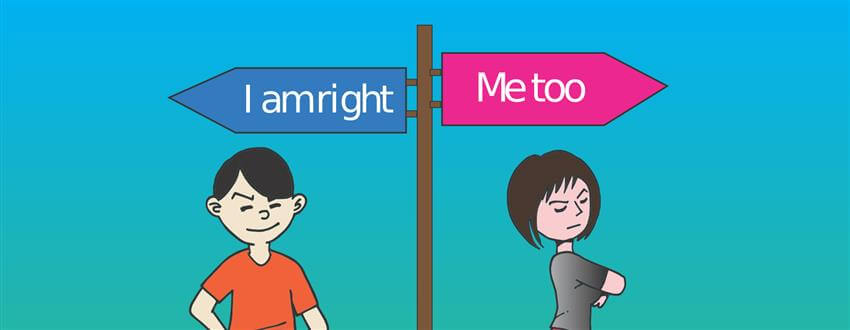
You’re in the middle of a conversation, and you share something vulnerable. They respond, but not in the way you expected. They interrupt, or brush past it - something about it feels dismissive of what you meant.
Before you’ve had time to process it, something takes over.
You feel a sudden urge to correct them, to make them understand your point. You may even raise your voice and say something you instantly regret. What started as a small misunderstanding now feels heavy for days.
The worst part? You might even be able to justify your reaction. They weren’t listening. You were just standing up for yourself.
But later, when the heat has passed, you lie awake replaying the whole thing. And you realise that your reaction made the situation heavier than it needed to be. For them and for you.
Feeling > Situation
Most of us have been there. We unleash emotions wildly out of proportion, and in the aftermath can't figure out why it hit so hard.
We reflected last week on how silent expectations carry an emotional charge we don’t always recognise. That urgency to react, to justify, or have the last word, often means we never fully hear the other person.
A pattern mapped out thousands of years ago
This isn’t new. Arjuna’s panic on the battlefield looks nothing like a tense dinner conversation, but the mechanism underneath is the same.
At the beginning of the Bhagavad-gita, Arjuna stands on the battlefield, paralysed. His heightened emotions lead him to justify withdrawing from the very responsibility he needs to face.
Krishna helps him see what lies beneath such reactions. In Chapter 2, he explains that emotional reactions are part of a subtle chain:
It begins with attachment - a fixation on how we want things to be.
When reality doesn’t match that, frustration arises.
From frustration comes confusion.
Then a loss of perspective.
And finally, a loss of the clarity we need to act wisely.
So why do we lose our cool?
Vedic wisdom explains that when our sense of stability is tied to external situations - how someone responds, whether we feel understood, whether things go the way we expect - those situations gain the power to dictate how we feel.
And what are we really attached to in those moments? Being right. Being understood. Being in control.
This is a precarious place to be, because everything outside us can change in the blink of an eye. Nothing is within our control.
But when we redirect our attachment to a higher sense of purpose - a deeper, inner connection that isn’t swayed by anything outside of us - we naturally start to navigate the same situations differently.
It’s all about perspective
With this mindset shift, that same conversation, that person who provoked us before, doesn’t elicit the same reaction. The desperate need to correct, disappears.
We become capable of something simple but rare: pausing, listening, letting something exist without firing back.
And in that pause, we can finally hear what the other person was actually trying to say.
One Minute Practice: The Heat Of The Moment
Don’t just try to “calm down.” While the intention may be there, it’s often very difficult to do in the moment. Instead, redirect your focus.
When you feel that urgency to react to something, bring your attention to something higher than the situation. It could be your values, your long-term intention for the relationship, or even a simple internal anchor like a spiritual mantra, such as the Hare Krishna Mantra we explored in Digest 12.
The goal isn’t to suppress, but to step out of the narrow frame of the moment. Repeat a mantra or intention for a few seconds, just enough to create distance and break the intensity.
Your response then shifts into something more supportive of the relationship - no longer about ‘winning the moment’, but about being true to something deeper than it.
If this resonated, watch the 2-minute video below where Radhanath Swami speaks about real detachment from a spiritual perspective: